googlef87758e9b6df9bec.html A Sure Word

Monday, April 15, 2013

What Is Their Ultimate Authority? Because It Isn't Science!


Evolutionists pretend to be believers in science. I don't mean they intentionally treat science like it's a religion (although they often act like it is), but certainly they put their confidence in the findings of science. They pretend to be thirsty seekers of knowledge who go only where the evidence leads them. They pretend to reject creation not because they reject the Bible but because “science” has shown that the world is billions of years old and that evolution is true. Blah, blah, blah.

I've often written about the self defeating worldviews of unbelievers. The simple fact that they their worldview rejects the Bible means they have laid the foundation of their arguments on shifting sand. As a consequence, their philosophies cannot stand up to scrutiny. The idea that knowledge ultimately comes from science is another of those self defeating philosophies.

Have you ever heard someone say, “I don't believe anything without scientific evidence”? That's about the most ridiculous statement I think I've ever heard anyone utter. It can't stand up to the most cursory examination yet I hear it all the time. My usual response anymore is to simply ask the person this: “So, you don't believe anything without scientific evidence, eh? Could you please show me the scientific evidence that led you to that belief?”

You can imagine the kinds of responses that I get. Sometimes they launch into a rant where they mock, ridicule, and insult me. Sometimes they attempt a psuedo-intellectual argument to justify their stance. But not one time has anyone ever showed me any scientific evidence to justify this belief.

It's fairly obvious that there really is no scientific evidence to justify the belief that we should only believe things with scientific evidence so the people who claim believe this actually do believe some things without scientific evidence. Therefore, their statement contradicts itself and, according to logic, something that contradicts itself cannot be true.

Since these people have a belief that isn't based on science, I next wonder what they consider to be the final authority in determining what is true. After all, it can't be science. What I mean is, these people already believe something for which there is no scientific evidence (namely, that they should only believe things with scientific evidence) so what else – besides science – convinced them that belief was true?

How do we know anything is true? How do we know what is right and what is wrong? There must be some ultimate authority which we can use to determine these things. For the believer, of course, the final authority is the word of God. The Bible has the last word on anything it addresses. I know what is right and wrong because I can appeal to the one who created right and wrong. I know the true origin of the universe because the one who created the universe has revealed it to us.

On the other hand, to what authority can the unbeliever appeal except his own opinion? And if he is his own authority in determining what is true, then truth cannot be absolute. Neither can right or wrong be absolute. The atheist has no grounds on which he can say Christians are wrong. If absolute truth exists... if absolute right and wrong exists... they can only exist if God exists!

I don't appeal to the Bible because it's the easiest explanation. I believe the Bible because it is the only explanation. Nothing in this universe makes sense unless God is real. It's difficult for evolutionists to persuade me that scientific evidence trumps Scripture when they cannot even support their own claims using scientific evidence. If you want to convince me that I'm wrong, give me something besides your opinion.

I'm asking in earnest. Atheists, how do you ultimately decide what is true? Science doesn't do it. There has to be something else going on in your brain. What is it? Go ahead. I'm listening.

Monday, April 1, 2013

Really, Google?


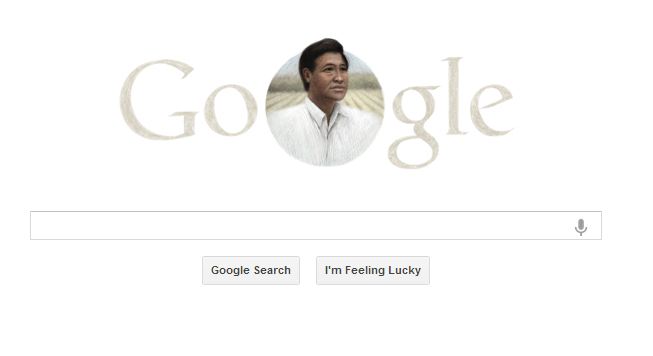
Yesterday was Easter, right? I mean, it was on the calendar. I've been seeing Easter baskets and candy on display in stores for weeks. I went to Church and heard a sermon about the Resurrection. Yeah, I'm pretty sure it was yesterday. Why is it then, that when I logged onto Google, I saw this on their front page:


Really, Google? On the biggest holiday in Christendom, you chose to honor the birthday of Cesar Chavez instead? I guess Google is heading the way of Yahoo.

It's a shame that my blog is hosted by Google. Frankly, I'm getting tired of patronizing businesses that spurn my beliefs. It's old news that retail stores stopped celebrating “Christmas” and adopted the generic “Holiday” themes. Now the word “Easter” is being abandoned for the less religious sounding “Spring” activities. I'm reading more and more accounts of the “Spring bunny” and “egg hunts.”

Oh well. What can I do about it? It's not like I'm going to move my blog because Google is joining the politically correct crowd. If it were an easy thing to do, I would do it but there's more to it than just uploading my posts onto another site. I will, however, use my blog to say how stupid I think Google is being. So here I go:

Google, you're being stupid!

Sunday, March 31, 2013

An Easter Prayer


When therefore it was evening, on that day, the first day of the week, and when the doors were shut where the disciples were, for fear of the Jews, Jesus came and stood in the midst, and saith unto them, Peace be unto you. And when he had said this, he showed unto them his hands and his side. The disciples therefore were glad, when they saw the Lord. Jesus therefore said to them again, Peace be unto you: as the Father hath sent me, even so send I you. And when he had said this, he breathed on them, and saith unto them, Receive ye the Holy Spirit: whose soever sins ye forgive, they are forgiven unto them; whose soever sins ye retain, they are retained. But Thomas, one of the twelve, called Didymus, was not with them when Jesus came. The other disciples therefore said unto him, We have seen the Lord. But he said unto them, Except I shall see in his hands the print of the nails, and put my hand into his side, I will not believe. And after eight days again his disciples were within, and Thomas with them. Jesus cometh, the doors being shut, and stood in the midst, and said, Peace be unto you. Then saith he to Thomas, Reach hither thy finger, and see my hands; and reach hither thy hand, and put it into my side: and be not faithless, but believing. Thomas answered and said unto him, My Lord and my God. Jesus saith unto him, Because thou hast seen me, thou hast believed: blessed are they that have not seen, and yet have believed. Many other signs therefore did Jesus in the presence of the disciples, which are not written in this book: but these are written, that ye may believe that Jesus is the Christ, the Son of God; and that believing ye may have life in his name.
John 20:19-31

Thomas, known infamously as “Doubting Thomas,” refused to believe in the Resurrection until he had seen the risen Savior with his own eyes. When he saw Jesus alive, he addressed Him as, “my Lord and my God!” Thomas had become a believer.

Jesus told Thomas that those who believe without seeing will be blessed. We have not seen the resurrected Christ with our own eyes, but we have the account of His resurrection left by those who did witness it. John concluded this account with the words, “these are written, that ye may believe that Jesus is the Christ, the Son of God; and that believing ye may have life in his name.

My prayer on this Easter is John's prayer – that you would believe in the living Savior and that, by believing, you would have life!

Happy Easter!

Saturday, March 30, 2013

The Resurrection is Not Like the Easter Bunny – but it is Like Jonah.


Then some of the Pharisees and teachers of the law said to him, “Teacher, we want to see a sign from you.” He answered, “A wicked and adulterous generation asks for a sign! But none will be given it except the sign of the prophet Jonah. For as Jonah was three days and three nights in the belly of a huge fish, so the Son of Man will be three days and three nights in the heart of the earth.””
Matthew 12:38-40

When the Pharisees asked Jesus for a sign to validate the authority of what He taught, He promised them only one sign, the sign of His resurrection. Interestingly, He compared His resurrection to the Old Testament account of Jonah. In the same way that Jonah was in the belly of the sea creature for three days, Jesus would be in the tomb for three days.

Jesus often used familiar events from the Old Testament to teach the New Testament believers about Himself. Consider this passage where Jesus talks about His second coming:

As it was in the days of Noah, so it will be at the coming of the Son of Man. For in the days before the flood, people were eating and drinking, marrying and giving in marriage, up to the day Noah entered the ark; and they knew nothing about what would happen until the flood came and took them all away. That is how it will be at the coming of the Son of Man.”
Matthew 27:37-39

Let's think about these analogies for a moment. I've heard many liberal Christians claim that many, most, or even all of the fantastic “stories” in the Old Testament are just that – stories. Jonah did not live inside a whale. David did not kill a 9 feet tall giant. Noah didn't really build an ark. Moses did not really part the Red Sea. What's more, most of these liberal Christians not only deny the event, they also deny the characters. There was no Jonah. There was no David. There was no Noah. There was no Moses. All of these events, and even all of these people, are just analogies. They're parables – just like the parables that Jesus taught. They teach a spiritual truth but weren't physical realities.

Here's the dilemma that I see. If Jonah was a parable, then is the resurrection also a parable? Did Jesus really rise from the dead after three days or does the Bible only say He rose from the dead in order to teach some “spiritual truth”? Likewise, how do we know that Jesus is literally coming again? If the Flood didn't literally happen, then maybe the Second Coming is just another parable that Jesus told.

Would it really make any sense for Jesus to compare a real event to an incredible one? Remember, this is more than a simple analogy.  Using a hypothetical example that someone can understand is a powerful, rhetorical tool.  But in these cases, we're talking about fantastic events.  What if I said, “Just like the Easter Bunny hides eggs for children to find, we also should his His words in our hearts”? Or maybe, “We exchange gifts at Christmas because Santa brings gifts every Christmas”? You can see how comparing a literal truth to a fictional account can actually diminish the point being made.

Furthermore, if we begin assigning the label of “parable” to any event or person we find too incredible, then on what grounds can we claim any part of the Bible is true? How do we know, for example, that Jesus Himself was a real person? After all, if Jonah wasn't real, and if Noah wasn't real, then how do we know Jesus was indeed a real person in history? Maybe the entire Person of Jesus is an analogy meant to represent God's presence among His people.

Believing that events from the Old Testament events are myths has consequences when considering New Testament events. How can someone claim to believe in a literal Second Coming if he refuses to believe in a literal Flood? If someone believes that Jonah wasn't really in a fish three days, then how can he believe Jesus was really in the tomb three days? To what literary clues can he point to distinguish between myth and reality (besides his own credulity)?

I believe the plain reading of the words of the Bible conveys the most obvious meaning. Simply hermeneutics tells us when Jesus is speaking in parables and when He is speaking about real events. The Second Coming is a real event. The Flood was a real event. Any attempt to allegorize some events in the Bible while affirming others is nothing more than special pleading.